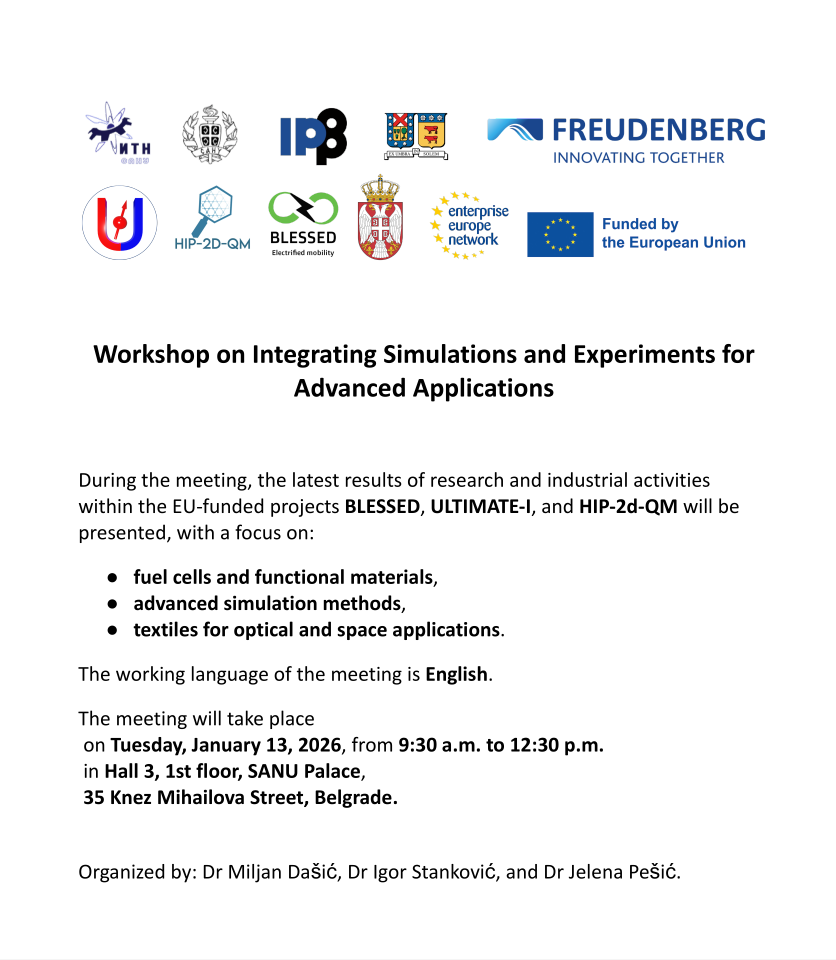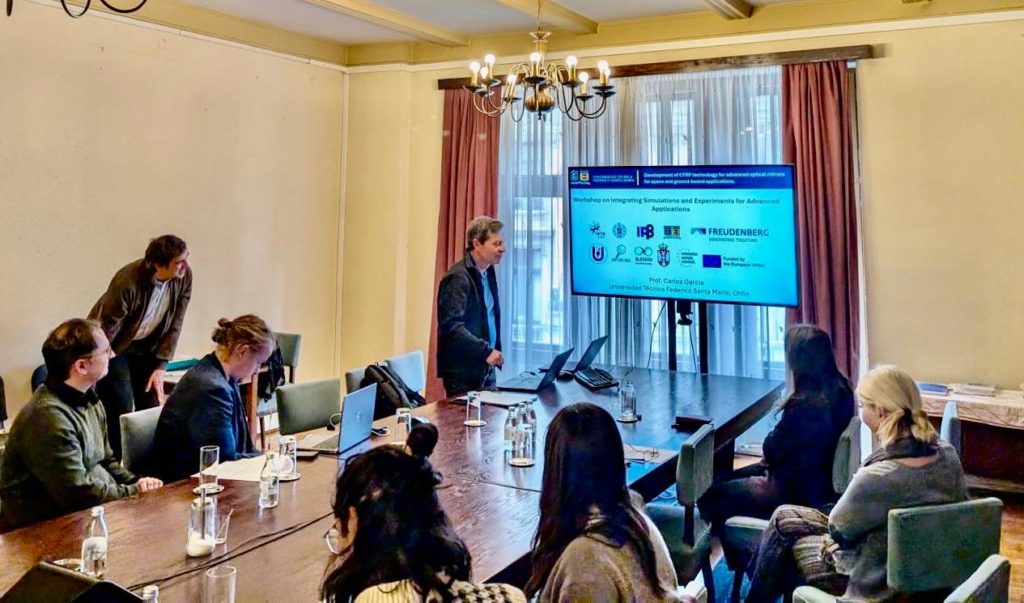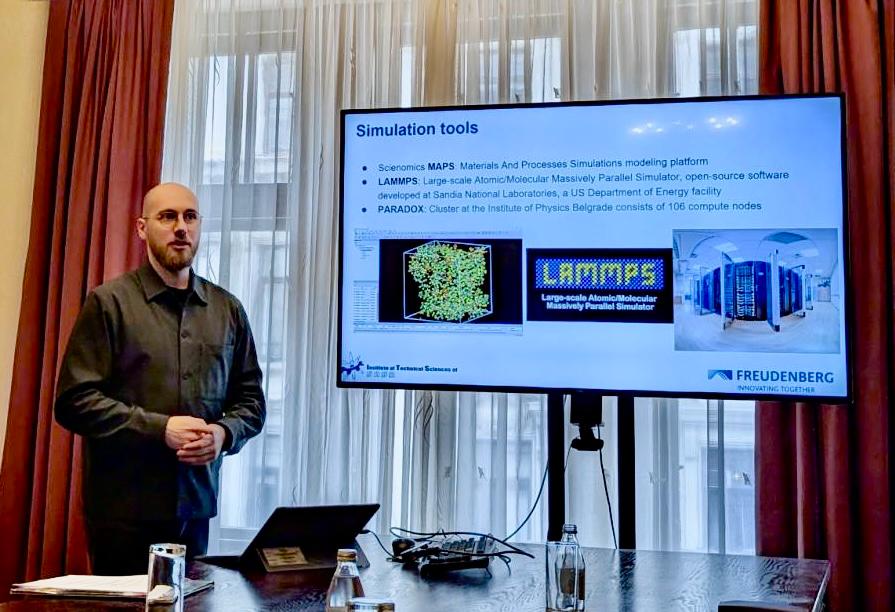

On January 13, 2026, we organized the Workshop on Integrating Simulations and Experiments for Advanced Applications at the Serbian Academy of Sciences and Arts (SANU) in Belgrade. The event, supported by Enterprise Europe Network, brought together researchers from academia and industry to discuss how multiscale simulations and advanced experimental methods can jointly accelerate materials innovation.
The workshop covered recent results from the European Union-funded projects ULTIMATE-I, BLESSED, and HIP-2d-QM, with a strong focus on fuel cells and functional materials, advanced atomistic and continuum simulations, and applications spanning spintronics, ferromagnetism, energy conversion, optics, and space technologies.
The scientific program highlighted the role of molecular dynamics, reactive force fields (ReaxFF), density functional theory, and discrete element methods in understanding complex material behavior. Topics included interactions of small molecules with graphene and MoS₂ nanonetworks, hydration-controlled transport in Nafion membranes, multiscale modeling of enzyme–substrate interactions, and degradation mechanisms in PEM fuel cell electrodes. Industrial perspectives were provided by Freudenberg Technology Innovation, demonstrating how digital modeling is increasingly embedded in materials and process development.
Beyond individual presentations, the workshop fostered open discussion on how simulation-driven insights can guide experiments, improve material design, and shorten development cycles. The interdisciplinary and international character of the meeting underlined the importance of close collaboration between academic institutions and industrial partners.
We thank all speakers and participants for their contributions and the lively scientific exchange. Events like this reinforce the value of integrating simulations and experiments to address current challenges in energy, functional materials, and advanced applications.